My Roof Is Leaking Right Now in Orlando. What to Do in the Next 24 Hours and How to Fix It Properly.
Why Is My Orlando Roof Leaking? The Most Common Causes
Missing or damaged shingles
Wind events are the most common cause of sudden leaks in Orlando. A single storm can lift or crack shingles over a garage, a rear section, or along the ridge line. Once shingles are missing the underlayment beneath them is exposed and rain finds a way through quickly. If you noticed shingles on your lawn or driveway after a storm, that is almost certainly your leak source.
Clogged gutters
Florida’s combination of heavy rainfall and dense tree canopy means gutters clog fast. When gutters overflow, water backs up under the drip edge and into the fascia board. The leak shows up as a ceiling stain near the exterior wall rather than in the middle of the room. Clean gutters are one of the simplest preventive measures an Orlando homeowner can take.
Faulty flashing
Flashing is the metal seal around every penetration point on your roof including chimneys, vent pipes, skylights, and roof edges. In Florida’s heat cycles, flashing expands and contracts constantly. Over time the sealant cracks and the metal separates from the surface it was sealing. Flashing failure is one of the most common leak sources on roofs that are otherwise in reasonable condition.
Worn-out sealants
Every pipe boot, vent cover, and penetration seal on your Orlando roof was originally sealed with roofing caulk or rubber boot material. Florida’s UV intensity and heat degrade these sealants faster than in cooler climates. A sealant that looked fine three years ago may be cracked and open today. Sealant deterioration causes slow leaks that often show up as water stains on ceilings during heavy rain only.
Aging or deteriorating shingles
An Orlando roof past 15 years old has gone through hundreds of heat cycles, multiple storm seasons, and sustained UV exposure. Shingles that are curling, cracking, or losing significant granules no longer shed water effectively. A heavy Florida rainstorm on a roof in this condition will find the weak points.
Flat roof membrane failure
Homes with flat or low-slope sections over garages or additions are particularly vulnerable to leak issues. Older flat roof materials like modified bitumen develop blisters, separated seams, and cracks that allow water to pond and eventually penetrate. If your leak is over a flat section, the membrane is almost always the cause.
Your Roof Is Leaking. What to Do Right Now.
Contain the water damage
Your first priority is limiting interior damage. Place buckets or large containers under active drips. Lay down towels or old sheets to protect flooring. If you see a bulge in your ceiling where water is pooling, carefully puncture the lowest point with a screwdriver to let it drain in a controlled way into a bucket. A pooling ceiling that is not drained can collapse suddenly and cause far more damage than a controlled drip.
Document everything before you clean up
Before you move anything or start cleaning, take photos and video of the leak, the water damage, any staining, and everything that has been affected. This documentation is your insurance claim evidence. Adjusters need to see the damage as it happened, not a cleaned-up version. Photograph the ceiling, the walls, the floor, and any damaged belongings.
Assess the situation from a safe spot
Look at the ceiling and walls around the leak. Is the stain spreading? Is there only one drip point or multiple? Can you hear water moving inside the wall? If the leak appears to be coming from multiple points or the water stain is expanding rapidly, you are dealing with a significant intrusion that requires immediate professional response, not a wait-and-see approach.
Protect the drain ceiling building below
If there is a floor below the affected ceiling, check it too. Water travels along joists and can appear in a room that is not directly below the leak. Move any electronics, furniture, and valuables out of the affected area and the room below it as a precaution.
How to Temporarily Stop a Roof Leak During a Storm
Use an emergency tarp
A heavy-duty polyethylene tarp placed over the damaged roof section and secured at the ridge is the most effective temporary measure available to a homeowner. The tarp should extend past the ridge line and be weighted or fastened securely enough to stay in place in wind. This is a short-term solution that buys you days or weeks of protection while permanent repair is arranged. Do not attempt to tarp a roof during active rain or in high wind. Wait for conditions to be safe.
Apply roofing cement or sealant
If you can safely access the roof after the rain has stopped and you can identify a small, specific leak point such as a cracked flashing joint or a lifted shingle edge, roofing cement applied to the affected area can provide a temporary seal. This is not a permanent fix and it does not address the underlying cause, but it can slow an active leak enough to prevent interior damage until proper repair is completed.
Try roofing tape and patches
Self-adhesive roofing tape or peel-and-stick membrane patches are available at hardware stores and can be applied to small damaged areas when the surface is dry. They adhere better than roofing cement in some situations and provide a slightly more durable temporary seal. Again, these are temporary measures only. A patch over a failing underlayment or a missing shingle does not restore the roof’s waterproofing integrity.
Emergency Repair Mistakes to Avoid
Climbing on the roof in bad weather
A wet roof in Florida is extremely dangerous. Algae and moisture make even low-slope surfaces slippery enough to cause a fall. Do not get on your roof during rain, immediately after rain, or in high wind. The temporary water damage from waiting a few hours for safe conditions is far less serious than a fall from your roof.
Using a temporary patch as a permanent fix
Roofing cement, tape patches, and tarps are emergency measures only. Homeowners who use them and then delay calling a contractor often end up with significantly more damage months later when the temporary measure fails or the underlying issue continues to worsen. A patch over a soft deck section does not stop the deck from continuing to absorb moisture.
Leaving loose materials unsecured
If you place a tarp on your roof, it must be properly secured. An improperly secured tarp in a Florida storm becomes a sail that can cause additional roof damage and create a flying debris hazard for your neighbors. Use sandbags, cap nails, or specialized tarp anchors rather than relying on the weight of the material alone.
When to Call a Professional Emergency Roofer in Orlando
Call OnPoint Roofing’s emergency roof repair team immediately if any of the following are true:
• Water is entering from multiple points simultaneously
• The ceiling is bulging or sagging under water weight
• You can see daylight through the roof deck from the attic
• The leak started after a storm and you have visible missing shingles
• Water is running down interior walls rather than just dripping from the ceiling
• You suspect the water has reached electrical wiring or fixtures
• The leak is on a flat section that has failed before
• Your temporary measures are not slowing the water intrusion
Any of these situations represents active and escalating damage. The cost of professional emergency response is always less than the cost of the additional damage that accumulates while you wait.
The Water Damage Is Widespread. What Now?
There is a risk of an electrical hazard
If water has reached the ceiling near a light fixture, a smoke detector, or an electrical outlet, shut off the circuit breaker for that area of your home before doing anything else. Water and live electrical circuits are a life safety issue. Do not wait to see whether the fixture looks damaged. If there is any possibility of water contact with wiring, turn off the power and do not restore it until the area has been assessed by an electrician.
Your DIY fix is not holding up
If you have applied a temporary fix and water is still coming in or if the fix held initially but a second rain event is causing the leak again, the problem is larger than the temporary measure addressed. This is the signal that a professional repair is needed before the next storm. In Central Florida’s storm season, waiting for a third rain event before calling a contractor means waiting through damage that is compounding each time.
Safety drain ceiling building
If significant water has accumulated above a ceiling, the drywall can fail under the weight. Before this happens, carefully create a small drainage hole at the lowest point of the bulge to allow controlled draining. Use a bucket directly below. Once drained, the ceiling may still need replacement but it will not collapse unexpectedly. Photograph the bulge before you puncture it for insurance documentation.
You suspect structural damage
Water that has been entering a roof system for an extended period, or that entered in large volume during a storm event, can compromise structural components including rafters, ceiling joists, and wall top plates. Signs of structural moisture damage include visible dark staining or discoloration on wood framing visible from the attic, soft or crumbling drywall at the ceiling-to-wall junction, and floors that feel soft or springy near exterior walls. If you see any of these signs, the repair scope goes beyond roofing and requires a contractor who can assess structural integrity.
How to Prevent Future Roof Leaks in Your Orlando Home
Schedule regular roof inspections
The single most effective thing an Orlando homeowner can do to prevent roof leaks is to schedule a professional inspection before hurricane season every year. An inspection catches failing flashing, cracked sealants, loose shingles, and compromised flat sections before they become active leaks. OnPoint Roofing provides free roof inspections across Orlando with written reports and photo documentation. An annual inspection before June is the best roof maintenance investment you can make in Florida.
Keep your gutters clean
Clogged gutters are a preventable leak source. In Orlando’s environment, gutters need cleaning at minimum twice a year, once in spring before storm season and once in fall after the leaves drop. If your home is surrounded by large trees, quarterly cleaning is more appropriate. Gutter guards can reduce maintenance frequency but do not eliminate it entirely.
Address small repairs immediately
A cracked pipe boot seal, a loose flashing joint, or a couple of missing shingles are inexpensive repairs when addressed promptly. Left unaddressed through a Florida storm season, the same issues become deck damage, underlayment failure, and interior water intrusion that costs ten times as much to fix. Our roof repair service covers all of these targeted fixes across Orlando at a fraction of replacement cost.
Prepare your roof for storm season
Before June 1 each year, walk around your home after every significant storm and look for visible shingle loss, gutter damage, or debris buildup at the roof line. Check your attic after heavy rain for any signs of moisture on the rafters. These simple homeowner checks between professional inspections catch problems while they are still minor.
Know when replacement is the right answer
A roof that is repeatedly leaking despite repairs is communicating something important. At some point continued repair investment on an aging roof costs more than a properly planned roof replacement. If your Orlando roof is over 15 years old and has leaked in multiple locations over the last three years, that conversation is worth having before the next hurricane season opens.
What to Expect During the Storm Damage Roof Inspection Process
The initial consultation and preparation
A qualified inspector starts the process by asking you questions before they get on the roof. When did the storm occur? What did you observe during or after? Have you had any previous repairs on this roof? Have you filed any prior claims? These questions establish a baseline that helps the inspector contextualize what they find and document the connection between storm event and observed damage.
The hands-on roof examination
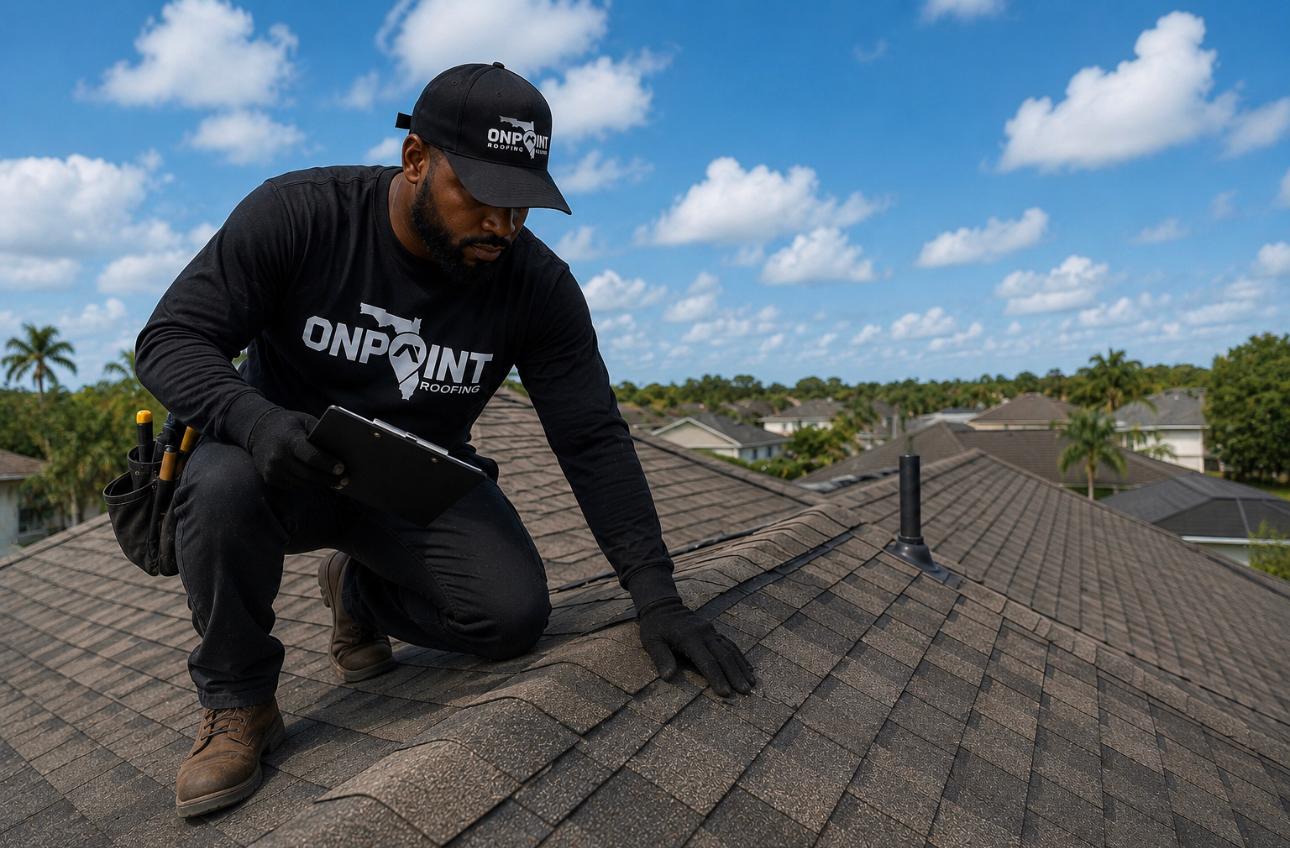
The physical inspection involves getting on the roof and examining shingles, ridge caps, flashing, penetrations, and the roof deck systematically. The inspector should check each roof section separately and note findings by section in the report. They should check the attic if accessible for moisture staining, daylight penetration, or structural concerns. A full inspection of an average Orlando home takes 45 minutes to an hour. Anything significantly less than that was not thorough.
Your detailed report and next steps
At the end of the inspection you should receive a clear verbal summary of findings immediately. The written report with photos should follow within 24 to 48 hours. The report should include: the date of inspection, the inspector’s license number, findings by roof section, identification of storm-caused damage specifically, documentation of metal surface impacts, photos of every finding, and a recommendation for repair or replacement with an itemized estimate. If the inspection finds no claimable damage, the report should say that clearly. OnPoint Roofing provides free storm damage inspections across Orlando with all of these elements included in the written report.
Understanding Functional vs Cosmetic Roof Damage in Florida Insurance Claims
Functional damage
Functional damage affects the ability of the roof to perform its waterproofing function. Missing shingles, cracked shingles, impact marks that have removed the granule protection layer, damaged flashing, and compromised underlayment are all functional damage. Insurance policies are written to cover functional damage because it directly creates a risk of water intrusion and interior damage. A claim based on functional damage has the strongest basis for full replacement coverage.
Cosmetic damage
Cosmetic damage affects the appearance of the roof without compromising its waterproofing performance. Minor surface scuffing, slight color variation from impact marks that did not remove the granule layer fully, and small dents on metal components that do not affect function are examples of cosmetic damage. Some Florida insurance policies include cosmetic damage exclusions that limit or eliminate coverage for damage that does not affect function. Knowing which type of policy you have before filing a claim avoids surprises after the adjuster visit.
Why your inspector’s assessment of functional vs cosmetic matters
An inspector who cannot clearly distinguish functional from cosmetic damage in their written report is handing the adjuster the opportunity to classify everything as cosmetic. A qualified inspector documents functional damage specifically with the language adjusters and policy terms use. The difference in claim outcome between a report that says shingles show impact marks and one that says shingles show functional damage from hail impact with granule loss exposing the asphalt mat is significant.
Filing Your Insurance Claim the Right Way After a Storm Inspection
What to do before your roof repair
File your claim before any permanent repair work begins. Insurance adjusters need to see the damage as it existed at the time of the storm. Completing repairs before the adjuster visit, even with good intentions, removes the physical evidence the adjuster needs to assess the claim. If active water intrusion requires immediate emergency stabilization, document everything thoroughly before and after the temporary repair. Temporary tarping and emergency patching do not disqualify your claim when properly documented.
Advocate for your roof repair
If the adjuster scope of loss is lower than your inspector’s estimate or misses items your inspector identified, you have the right to dispute it. Your inspector’s written report and estimate is the basis for a supplemental claim. Having your roofing contractor present during the adjuster visit prevents items from being overlooked in the first place. Our roof repair and roof replacement teams attend adjuster visits when requested and provide written competing estimates when the adjuster scope is incomplete.
Making sense of your insurance coverage
Understand your deductible and coverage type before the adjuster visit. Replacement cost value coverage pays for a new roof of similar quality. Actual cash value coverage deducts depreciation based on roof age. Knowing which you have sets realistic expectations for the payout and helps you plan for any gap between the insurance settlement and the full replacement cost.
Free vs Paid Inspections. What You Are Actually Getting.
Most licensed roofing contractors in Orlando offer free storm damage inspections. This is standard practice and a legitimate free inspection from a licensed contractor is genuinely free with no obligation. Here is how to distinguish a legitimate free inspection from one that is free in name only:
A legitimate free inspection
Includes a physical on-roof assessment, a written report with photos, an honest finding of no damage when none exists, and no requirement to sign any document beyond a basic access authorization. The inspector does not require Assignment of Benefits, does not pressure you to file a claim, and does not add conditions to the free offer after arriving at your home.
A free inspection that is not actually free
Requires you to file a claim through them, sign an Assignment of Benefits, commit to using their company for repairs as a condition of the inspection, or only provides verbal findings with no written documentation. If any of these conditions are attached to the free offer, the inspection has a price. You are just paying with your claim rights rather than cash.
How Much Should a Storm Damage Roof Inspection Cost in Orlando
For a licensed roofing contractor performing a storm damage inspection, the standard in the Orlando market is no charge with no obligation. This is the norm rather than the exception among established local contractors. The inspection is how they introduce their services to potential customers and the written report they provide adds genuine value regardless of whether the homeowner hires them for repair work.
Paid inspections are also available from independent home inspection firms and licensed roofing consultants who charge a flat fee typically between $150 and $400 for a detailed written report. These are appropriate in situations where a homeowner wants a completely independent assessment with no contractor affiliation, such as when preparing a property for sale or when an insurance dispute requires a neutral third-party opinion.
If you are dealing with an active insurance dispute or a denial you believe is incorrect, a paid independent inspection report from a licensed Florida roofing consultant can carry weight in the dispute process as a neutral third-party assessment. For most post-storm situations, a free inspection from a licensed, established Orlando contractor is the appropriate starting point.
Frequently Asked Questions About Roof Inspections After Storms in Orlando
Get a Free Storm Damage Roof Inspection in Orlando From a Licensed Local Contractor
OnPoint Roofing provides free storm damage inspections across Orlando and Central Florida with written reports, photo documentation, and findings in the format insurance adjusters work from. We attend adjuster visits, provide competing estimates when adjuster scopes are incomplete, and give you honest findings whether that means a claim worth filing or a clean bill of health for your roof