
How to Find the Right Roofing Inspector in Orlando After a Storm. What to Look For, What to Ask, and What the Inspection Should Cover
Why Choosing the Right Roof Inspector Matters More After a Storm
Whether your damage gets found at all
Hail impact marks, granule loss patterns, and underlayment compromise require a trained eye and a physical on-roof inspection to identify. An inspector who does not get on the roof, does not know what hail damage looks like specifically, or does not check metal surfaces and flashing details will miss damage that your insurance adjuster will also miss, costing you a claim you were entitled to.
Whether your documentation supports your claim
An insurance claim without proper inspection documentation is a weak claim. Your inspector’s written report, photo evidence, and findings in the format adjusters recognize is what turns observable damage into a paid claim. A vague verbal assessment or a report that does not specifically identify storm-caused damage versus wear is not useful documentation.
Whether you are protected from bad actors
Storm chasing contractors who operate door to door after weather events are a genuine problem in Orlando and across Central Florida. Some use the inspection as a foot in the door to pressure homeowners into signing contracts or Assignment of Benefits documents before the homeowner has time to think. Knowing what a legitimate inspector looks like protects you from this.
What Makes a Hail Damage Inspector Qualified in Orlando
Florida roofing license and certifications
Any contractor performing a roof inspection in Florida with the intent to identify damage and provide findings used in a repair or insurance process must hold a current Florida roofing license from the Department of Business and Professional Regulation. Ask for the license number before any inspection begins and verify it at DBPR.MyFlorida.com. Beyond the state license, certifications from manufacturer programs including GAF Master Elite, Owens Corning Preferred Contractor, or similar indicate that the inspector has completed additional product-specific training. These are not required but are a positive indicator of professional commitment.
Check for certifications and training
Inspectors with specific storm damage training have a more structured approach to identifying and documenting damage in the format insurance adjusters work from. Ask your inspector whether they have training or experience in insurance claim documentation specifically. An inspector who has worked alongside adjusters on previous claims understands what adjusters look for and where underpaid claims typically originate from gaps in the original inspection report.
Ask whether they have insurance claim experience
There is a meaningful difference between a contractor who can replace a roof and a contractor who knows how to document damage specifically for an insurance claim. Ask directly: have you worked with homeowners through the insurance claims process? Will you attend the adjuster inspection if I file a claim? Will your written report identify storm-caused damage separately from general wear? A contractor who can answer yes to all three is in a different category from one who simply hands you a repair estimate.
Confirm they are licensed and local
Local matters for more than just community reasons. A contractor with an established Orlando-area business has a reputation to protect, knows the local permit requirements across Orange, Osceola, and Seminole counties, and will be here after the storm season to stand behind their work. Out-of-state storm chasers operating temporarily in the market after a weather event have no such accountability. Always verify a physical Florida business address alongside the state license.
How to Verify Your Roofing Inspector's Credentials Before They Get on Your Roof
Verify their credentials and ask for references
Start with the DBPR license check before the inspection date. A current active license in good standing is the baseline. From there, check Google reviews specifically for mentions of storm damage inspections and insurance claim support. Ask the contractor for two or three references from Orlando homeowners who have gone through the inspection and claim process with them in the last 12 months. The specific question to ask references: did the inspection report support your insurance claim effectively?
Confirm their communication and professionalism
A professional inspector arrives on time, explains what they are going to check before they start, asks you relevant questions about when the storm occurred and what you have observed since, and gives you a clear expectation of when the written report will be delivered. An inspector who rushes through the process, cannot explain what they are looking for, or transitions immediately from findings to a sales pitch without giving you time to review the report is not operating in your interest.
Key Questions to Ask a Potential Roofing Inspector in Orlando Before Hiring
Ask about their business and experience
• How long have you been doing roofing inspections specifically in Orlando and Central Florida?
• How many storm damage inspections have you completed in Orange County in the past year?
• Do you carry liability insurance and workers compensation coverage?
• Are you a licensed Florida roofing contractor and can I verify your license number?
• Do you have a physical business address in Florida?
Ask about the project and process
• Will you physically get on the roof or is this a ground-level visual inspection?
• Will you check the attic as part of the inspection?
• What metal surfaces will you inspect for impact evidence?
• How long will the inspection take for my size home?
• Will I receive a written report with photos and when will it be delivered?
Ask about costs, timeline, and the insurance process
• Is the inspection genuinely free with no obligation?
• Will you attend the insurance adjuster visit if I file a claim?
• Will your report distinguish storm-caused damage from pre-existing wear?
• Do you provide a competing estimate if the adjuster scope is incomplete?
• Do you ask for or require an Assignment of Benefits to be signed?
That last question is important. Any inspector who requires an Assignment of Benefits as a condition of the free inspection is not offering a free inspection. They are acquiring your insurance claim rights as the price of the service. Legitimate inspectors never require this.
What Signs of Hail Damage Do Orlando Roofing Inspectors Look For
Damage on asphalt shingles
On asphalt shingles, hail creates circular impact marks where granules have been knocked from the surface. These marks expose the dark asphalt mat underneath. A trained inspector identifies the pattern, size consistency, and distribution of marks to confirm whether they are from a hail event rather than foot traffic, debris impact, or age-related granule loss. Multiple marks of consistent size across a section, particularly in combination with similar marks on metal components, is the standard for confirming a hail event.
Damage on wood and metal roofs
On wood shake roofing, hail creates splits along the grain with sharp edges, which distinguishes it from weathering splits that have soft, rounded edges. On metal roofing, hail creates visible dents across the surface. Metal surfaces including gutters, flashing, AC unit shrouds, and drip edge are often the clearest evidence of a hail event because the impressions hold their shape indefinitely after impact. A qualified inspector photographs all metal surface damage as supporting evidence for the claim.
What to Expect During the Storm Damage Roof Inspection Process
The initial consultation and preparation
A qualified inspector starts the process by asking you questions before they get on the roof. When did the storm occur? What did you observe during or after? Have you had any previous repairs on this roof? Have you filed any prior claims? These questions establish a baseline that helps the inspector contextualize what they find and document the connection between storm event and observed damage.
The hands-on roof examination
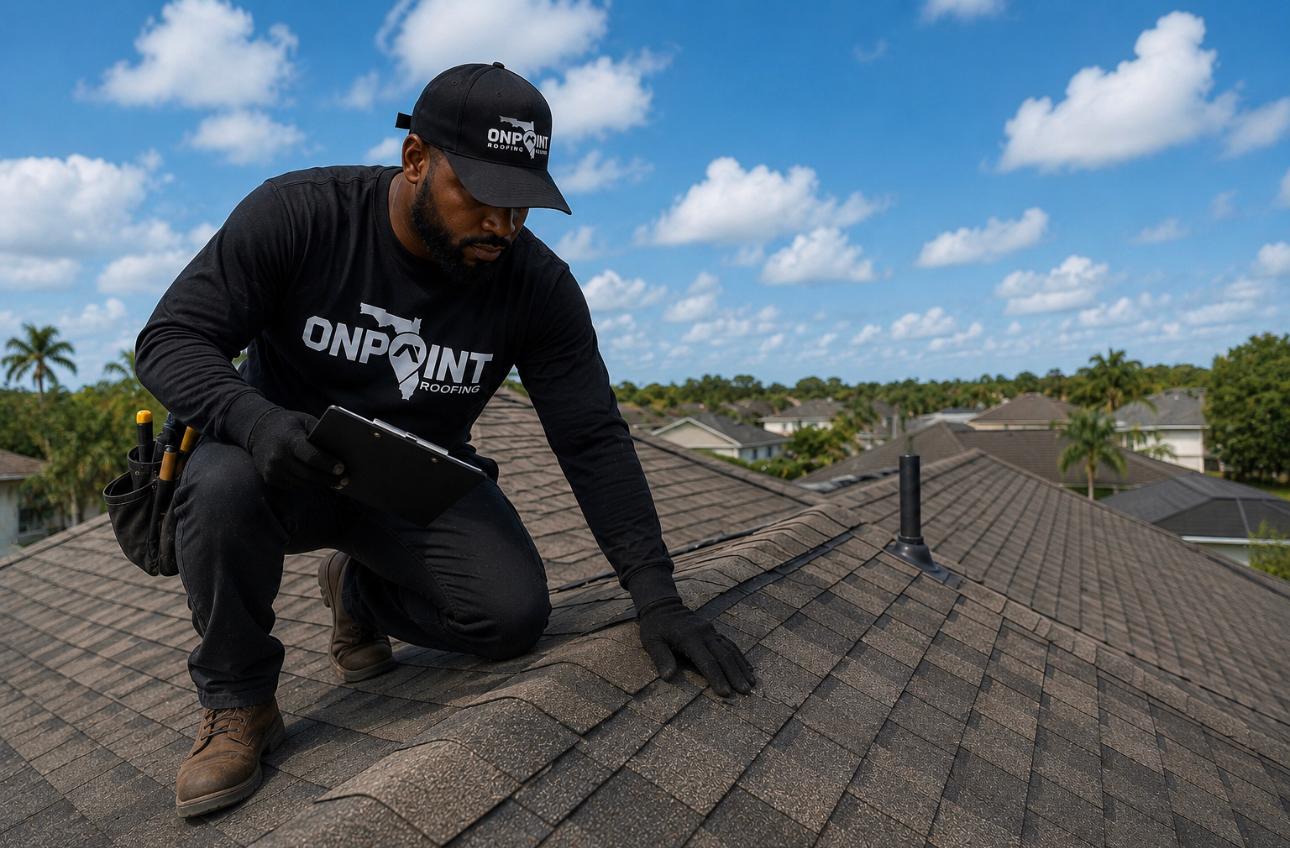
The physical inspection involves getting on the roof and examining shingles, ridge caps, flashing, penetrations, and the roof deck systematically. The inspector should check each roof section separately and note findings by section in the report. They should check the attic if accessible for moisture staining, daylight penetration, or structural concerns. A full inspection of an average Orlando home takes 45 minutes to an hour. Anything significantly less than that was not thorough.
Your detailed report and next steps
At the end of the inspection you should receive a clear verbal summary of findings immediately. The written report with photos should follow within 24 to 48 hours. The report should include: the date of inspection, the inspector’s license number, findings by roof section, identification of storm-caused damage specifically, documentation of metal surface impacts, photos of every finding, and a recommendation for repair or replacement with an itemized estimate. If the inspection finds no claimable damage, the report should say that clearly. OnPoint Roofing provides free storm damage inspections across Orlando with all of these elements included in the written report.
Understanding Functional vs Cosmetic Roof Damage in Florida Insurance Claims
This distinction is one of the most important concepts in a storm damage insurance claim and one that many Orlando homeowners do not learn until after a claim is filed.
Functional damage
Functional damage affects the ability of the roof to perform its waterproofing function. Missing shingles, cracked shingles, impact marks that have removed the granule protection layer, damaged flashing, and compromised underlayment are all functional damage. Insurance policies are written to cover functional damage because it directly creates a risk of water intrusion and interior damage. A claim based on functional damage has the strongest basis for full replacement coverage.
Cosmetic damage
Cosmetic damage affects the appearance of the roof without compromising its waterproofing performance. Minor surface scuffing, slight color variation from impact marks that did not remove the granule layer fully, and small dents on metal components that do not affect function are examples of cosmetic damage. Some Florida insurance policies include cosmetic damage exclusions that limit or eliminate coverage for damage that does not affect function. Knowing which type of policy you have before filing a claim avoids surprises after the adjuster visit.
Why your inspector’s assessment of functional vs cosmetic matters
An inspector who cannot clearly distinguish functional from cosmetic damage in their written report is handing the adjuster the opportunity to classify everything as cosmetic. A qualified inspector documents functional damage specifically with the language adjusters and policy terms use. The difference in claim outcome between a report that says shingles show impact marks and one that says shingles show functional damage from hail impact with granule loss exposing the asphalt mat is significant.
Filing Your Insurance Claim the Right Way After a Storm Inspection
What to do before your roof repair
File your claim before any permanent repair work begins. Insurance adjusters need to see the damage as it existed at the time of the storm. Completing repairs before the adjuster visit, even with good intentions, removes the physical evidence the adjuster needs to assess the claim. If active water intrusion requires immediate emergency stabilization, document everything thoroughly before and after the temporary repair. Temporary tarping and emergency patching do not disqualify your claim when properly documented.
Advocate for your roof repair
If the adjuster scope of loss is lower than your inspector’s estimate or misses items your inspector identified, you have the right to dispute it. Your inspector’s written report and estimate is the basis for a supplemental claim. Having your roofing contractor present during the adjuster visit prevents items from being overlooked in the first place. Our roof repair and roof replacement teams attend adjuster visits when requested and provide written competing estimates when the adjuster scope is incomplete.
Making sense of your insurance coverage
Understand your deductible and coverage type before the adjuster visit. Replacement cost value coverage pays for a new roof of similar quality. Actual cash value coverage deducts depreciation based on roof age. Knowing which you have sets realistic expectations for the payout and helps you plan for any gap between the insurance settlement and the full replacement cost.
Free vs Paid Inspections. What You Are Actually Getting.
Most licensed roofing contractors in Orlando offer free storm damage inspections. This is standard practice and a legitimate free inspection from a licensed contractor is genuinely free with no obligation. Here is how to distinguish a legitimate free inspection from one that is free in name only
A legitimate free inspection
Includes a physical on-roof assessment, a written report with photos, an honest finding of no damage when none exists, and no requirement to sign any document beyond a basic access authorization. The inspector does not require Assignment of Benefits, does not pressure you to file a claim, and does not add conditions to the free offer after arriving at your home.
A free inspection that is not actually free
Requires you to file a claim through them, sign an Assignment of Benefits, commit to using their company for repairs as a condition of the inspection, or only provides verbal findings with no written documentation. If any of these conditions are attached to the free offer, the inspection has a price. You are just paying with your claim rights rather than cash.
How Much Should a Storm Damage Roof Inspection Cost in Orlando
For a licensed roofing contractor performing a storm damage inspection, the standard in the Orlando market is no charge with no obligation. This is the norm rather than the exception among established local contractors. The inspection is how they introduce their services to potential customers and the written report they provide adds genuine value regardless of whether the homeowner hires them for repair work.
Paid inspections are also available from independent home inspection firms and licensed roofing consultants who charge a flat fee typically between $150 and $400 for a detailed written report. These are appropriate in situations where a homeowner wants a completely independent assessment with no contractor affiliation, such as when preparing a property for sale or when an insurance dispute requires a neutral third-party opinion.
If you are dealing with an active insurance dispute or a denial you believe is incorrect, a paid independent inspection report from a licensed Florida roofing consultant can carry weight in the dispute process as a neutral third-party assessment. For most post-storm situations, a free inspection from a licensed, established Orlando contractor is the appropriate starting point.
Frequently Asked Questions About Roof Inspections After Storms in Orlando
Get a Free Storm Damage Roof Inspection in Orlando From a Licensed Local Contractor
OnPoint Roofing provides free storm damage inspections across Orlando and Central Florida with written reports, photo documentation, and findings in the format insurance adjusters work from. We attend adjuster visits, provide competing estimates when adjuster scopes are incomplete, and give you honest findings whether that means a claim worth filing or a clean bill of health for your roof