What Is Roof Flashing and Why Do Most Orlando Roof Leaks Start There?
What Is Roof Flashing and What Does It Actually Do?
The Different Types of Roof Flashing on Orlando Homes
Step flashing
Step flashing is used where a sloped roof surface meets a vertical wall, such as along a dormer, a chimney side, or a section of siding above a lower roof. It consists of individual L-shaped metal pieces installed in steps alongside each course of shingles, with one leg under the shingle and one leg against the vertical surface. Step flashing is the most labor-intensive flashing type to install correctly and one of the most common sources of leaks when it is done poorly.
Counter flashing
Counter flashing is installed over step flashing, typically at chimney sides, and is embedded into the mortar joints of the masonry. It creates a second barrier that prevents water from running behind the step flashing. In Florida’s heat, the mortar joints holding counter flashing in place can crack and separate over time, allowing the counter flashing to pull away from the chimney face and create a gap that directs water directly into the roof system.
Valley flashing
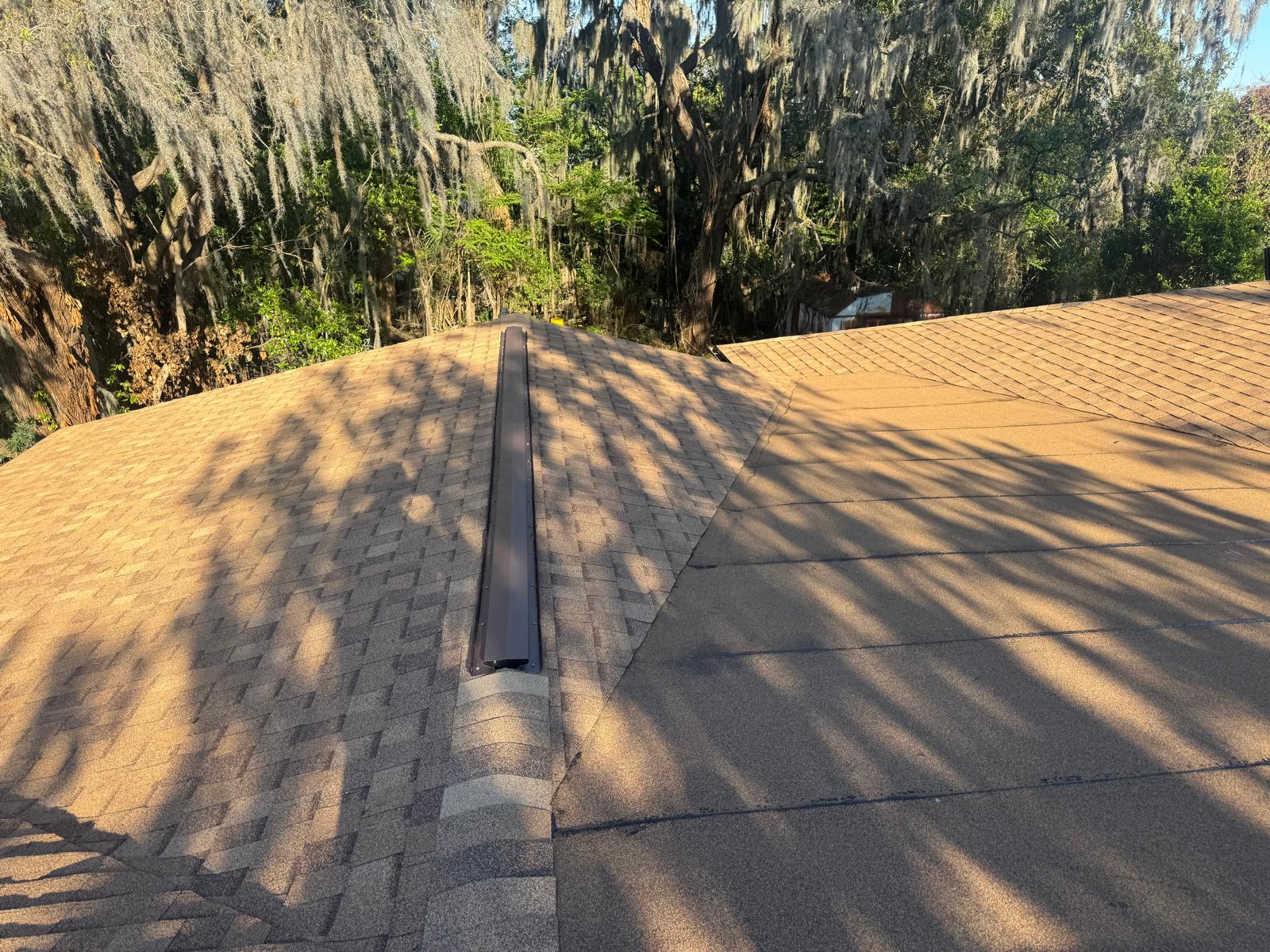
Where two roof planes meet and form a valley, water from both surfaces converges and flows together toward the gutter. Valley flashing or woven valley construction handles this concentrated water flow. Open metal valleys, where a visible strip of metal runs down the valley center, are common on Orlando homes and provide excellent drainage when properly maintained. Closed-cut valleys where shingles overlap across the valley can develop leaks when the shingle edge seals deteriorate.
Pipe boot flashing
Every plumbing vent pipe that exits through your roof is sealed with a pipe boot flashing, a metal base with a rubber or neoprene collar that seals around the pipe. Pipe boots are one of the most common leak sources on Orlando roofs for one simple reason: the rubber collar material degrades significantly faster than the surrounding shingles under Florida’s UV intensity and heat. A pipe boot that was installed with a roof replacement 10 years ago may have a rubber collar that has cracked or separated, creating a water entry point that is often not visible from the ground.
Drip edge flashing
Drip edge is the metal flashing installed along the eaves and rakes of the roof that directs water away from the fascia board and into the gutter. Current Florida Building Code requires drip edge on all residential roof installations. Homes re-roofed before this requirement or by unlicensed contractors may lack proper drip edge, allowing water to wick back under the shingle edge and into the fascia and soffit over time.
Skylight flashing
Skylights require integrated flashing systems that seal the skylight frame to the surrounding roof surface. Factory-installed skylight flashing kits are the standard and perform well when installed correctly. Skylights that were added to a home after original construction, or whose flashing was disturbed during a previous roof replacement, are particularly prone to leaking in Orlando’s heavy rain events.
Why Roof Flashing Fails More Quickly in Florida Than Other States
Florida’s combination of UV intensity, extreme heat cycling, humidity, and storm frequency creates the most demanding environment for roof flashing performance in the country. Materials and sealants that last 20 years in a northern state may fail in 8 to 12 years in Central Florida conditions.
UV degradation of sealants
Every flashing installation relies on roofing sealant or caulk at the edges and joints to create a complete watertight seal. Florida's UV intensity is among the highest in the country. Roofing sealants that are exposed to direct Florida sun degrade significantly faster than in cooler climates. A sealant that was properly applied during a roof installation 10 years ago may now be cracked, shrunken, or completely missing in areas of high UV exposure.
Thermal expansion and contraction
Orlando's daily temperature swings from morning to afternoon, and the dramatic difference between summer and winter rooftop temperatures, cause constant expansion and contraction in metal flashing materials. Over hundreds of cycles per year, this movement works metal flashing pieces loose from their fasteners and sealant bonds. A fastener that was tight at installation may have worked loose enough to allow water entry under wind-driven rain conditions.
Chimney mortar deterioration
For homes with masonry chimneys, the mortar that holds counter flashing embedded into the chimney face is subject to the same Florida weathering process. Orlando's freeze-thaw cycles are minimal but the combination of UV, heat, and rain still degrades mortar over time. Cracked or missing mortar allows counter flashing to move and creates gaps that direct water into the roof-to-chimney junction.
Storm impact damage
Every significant wind event in Orlando subjects flashing pieces to uplift forces that can partially lift or displace them. High-velocity wind-driven rain gets under partially displaced flashing and into the structure below. A single tropical storm that does not damage any shingles can still shift flashing pieces enough to create active leak points that appear in the next heavy rain event.
Biological growth
Florida's humidity encourages algae and moss growth not just on shingles but along flashing edges and in valley intersections. Biological growth at flashing joints retains moisture against the flashing seal and accelerates sealant degradation.
Signs Your Orlando Roof Has a Flashing Leak
Flashing leaks often look different from shingle leaks because the water entry point is at a specific transition location rather than across the field of the roof. Here is what to look for:
Interior signs
● Water stains on ceilings that appear specifically near a chimney, skylight, dormer, or exterior wall rather than in the middle of the room
● Water staining or discoloration on interior walls near where a roof-to-wall transition exists on the exterior
● Musty smell in a specific area of the home that correlates with a penetration point above
● Attic moisture or staining on rafters near a chimney or vent pipe location
● Active dripping during rain that stops when rain stops but then reappears the next rain event
Exterior signs
● Visible separation between flashing and the adjacent surface, a chimney face, a skylight frame, or a wall section
● Missing or cracked roofing sealant along flashing edges visible from the roofline
● Rust staining running down from a metal flashing location onto surrounding shingles
● Lifted or bent flashing edges visible from the ground on lower roof sections
● Deteriorated rubber collar on a visible pipe boot
Can Flashing Be Repaired Without Replacing the Entire Roof?
Yes, in most cases flashing repair is a targeted, cost-effective fix that does not require a full roof replacement. This is one of the most important things for Orlando homeowners to understand because a flashing leak on a relatively new roof is not a reason to replace the entire system.
A licensed roofing contractor can replace individual pipe boot collars, re-seal step flashing joints, re-bed counter flashing at a chimney, install new valley flashing, or replace a damaged skylight flashing kit without disturbing the surrounding shingle field. These targeted roof repairs typically cost $300 to $1,500 depending on the type and location of the flashing failure.
The rule of thumb: if the shingles are in good condition and the roof is under 15 years old, a flashing repair is almost always the right call. If the roof is over 15 years old and flashing is failing, it may be more cost-effective to address the flashing as part of a full replacement rather than investing in repairs on a system approaching end of life.
How Long Does Roof Flashing Last in Florida?
Flashing lifespan in Florida depends heavily on the material used and the quality of the original installation. Here is the realistic lifespan for each flashing type in Central Florida conditions:
| Material | Florida Lifespan | Common Failure Mode |
|---|---|---|
| Galvanized steel | 15 to 20 years | Rust and corrosion at cut edges and fastener points |
| Aluminum | 20 to 30 years | Oxidation and thermal expansion cracking at joints |
| Copper | 50 plus years | Most durable option. Minimal failure in FL conditions. |
| Lead | 30 to 40 years | Softens in FL heat. Can deform at chimney joints. |
| Pipe boot rubber collar | 8 to 12 years in FL | UV and heat degradation. Most common flashing failure. |
| Roofing sealant at flashing edges | 5 to 10 years in FL | UV cracking and shrinkage. Needs periodic inspection. |
What a Professional Flashing Inspection Covers in Orlando
A thorough roof inspection by a licensed contractor specifically checks every flashing point on your roof. Here is what that inspection covers:
● All pipe boot collars checked for rubber collar cracking, separation, or UV degradation
● Step flashing at all dormer and chimney sides checked for displacement and sealant condition
● Counter flashing at chimney faces checked for mortar joint integrity and separation
● Valley flashing condition checked for rust, debris buildup, and edge seal integrity
● Drip edge condition checked at all eaves and rakes
● Skylight flashing frames checked for separation and sealant failure
● Roof-to-wall transition flashing checked at all locations
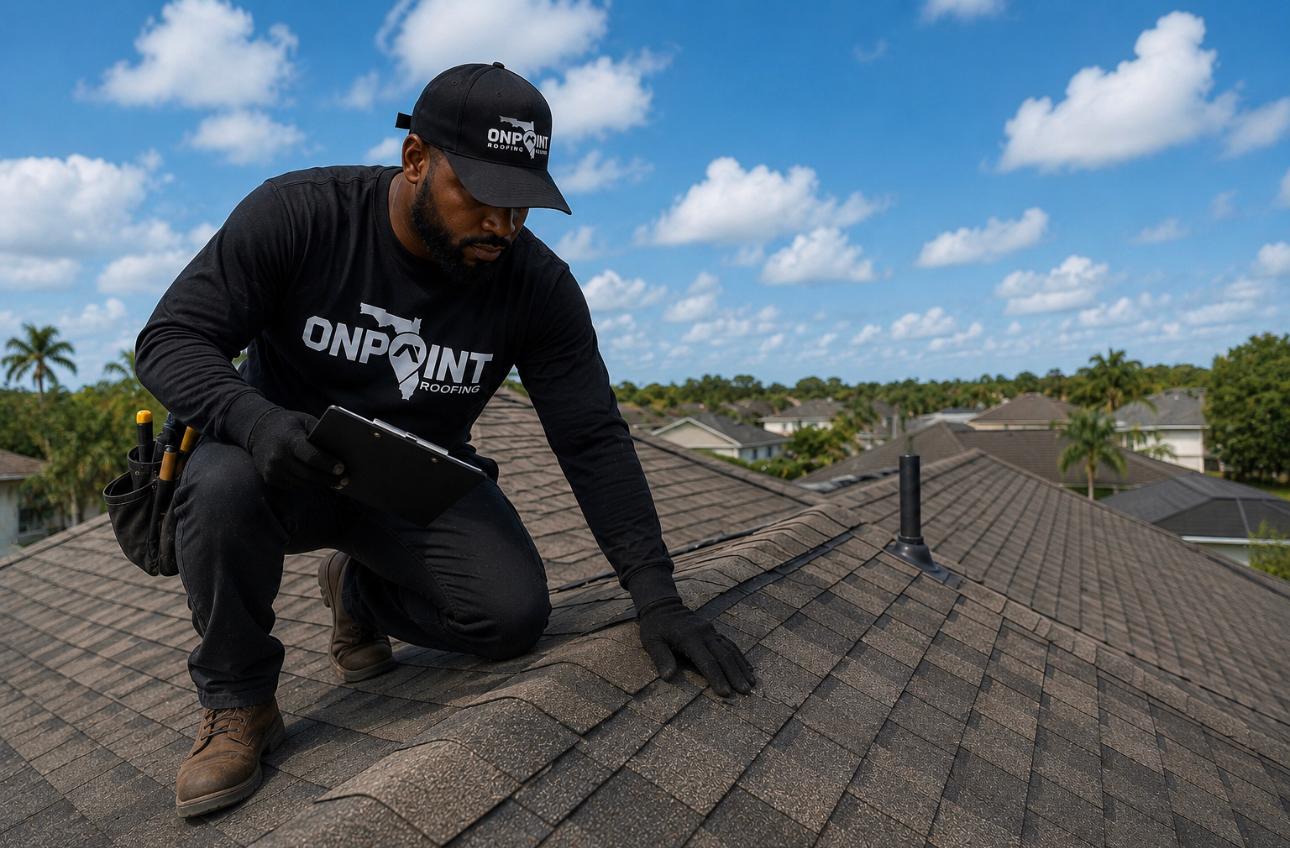
● All visible sealant points rated for remaining serviceable life OnPoint Roofing includes a complete flashing assessment in every free roof inspection across Orlando and Central Florida. We photograph every flashing point we check and include the findings in the written report you receive.
Frequently Asked Questions About Roof Flashing in Orland
The fastest way to get a clear, honest answer for your specific roof is a free inspection. You will walk away knowing exactly what you are dealing with and why. Book your free inspection here.
Get a Free Flashing Inspection for Your Orlando Roof
Most flashing leaks are caught late because homeowners do not know what to look for. OnPoint Roofing’s free inspections cover every flashing point on your roof with
photo documentation and honest findings. If a targeted repair is all you need, we tell you that. If the flashing failure is part of a wider aging issue, we tell you that too.