Free Hail Damage Roof Inspection in Orlando. What It Actually Covers, What to Watch Out For, and How to Make the Right Decision After.
Does Orlando Actually Get Hail Damage? More Than Most People Realize.
What a Free Hail Damage Roof Inspection in Orlando Actually Covers
Shingle surface inspection for impact marks Hail leaves circular bruise marks on asphalt shingles where granules have been knocked away. These marks look different from normal wear. A trained inspector identifies true hail impact patterns versus random granule loss from age. The location, density, and distribution of impact marks tells an experienced inspector whether the damage pattern is consistent with a hail event.
Granule loss mapping Granules are the protective surface layer on asphalt shingles. Hail knocks them loose in the impact zone, exposing the underlying asphalt mat to UV and weather. A proper inspection maps where granule loss is occurring and whether the pattern matches a storm event. Granule buildup in your gutters after a storm is one of the clearest physical indicators of hail impact.
Metal surface inspection This is one of the most reliable parts of a hail damage assessment. Gutters, flashing, drip edge, vent covers, and AC unit shrouds are all softer metal surfaces that dent visibly under hail impact. Multiple fresh dents of consistent size across metal components is strong physical evidence of a hail event that adjusters recognize and accept. Your inspector should photograph every dent on metal surfaces during the inspection.
Ridge cap and hip shingle assessment Ridge caps sit at the peak of your roof and take the most direct impact during a hail event. Damage to ridge caps is often clearer and more extensive than on field shingles. A thorough inspection checks the full ridge line and all hip intersections for cracking, splitting, and impact marks.
Flashing and sealant inspection Hail impacts can crack or dislodge flashing at penetration points including chimney bases, vent pipes, and skylight frames. Sealant that was intact before a storm can crack under impact and create immediate water entry points. Your inspector should check every penetration point specifically.
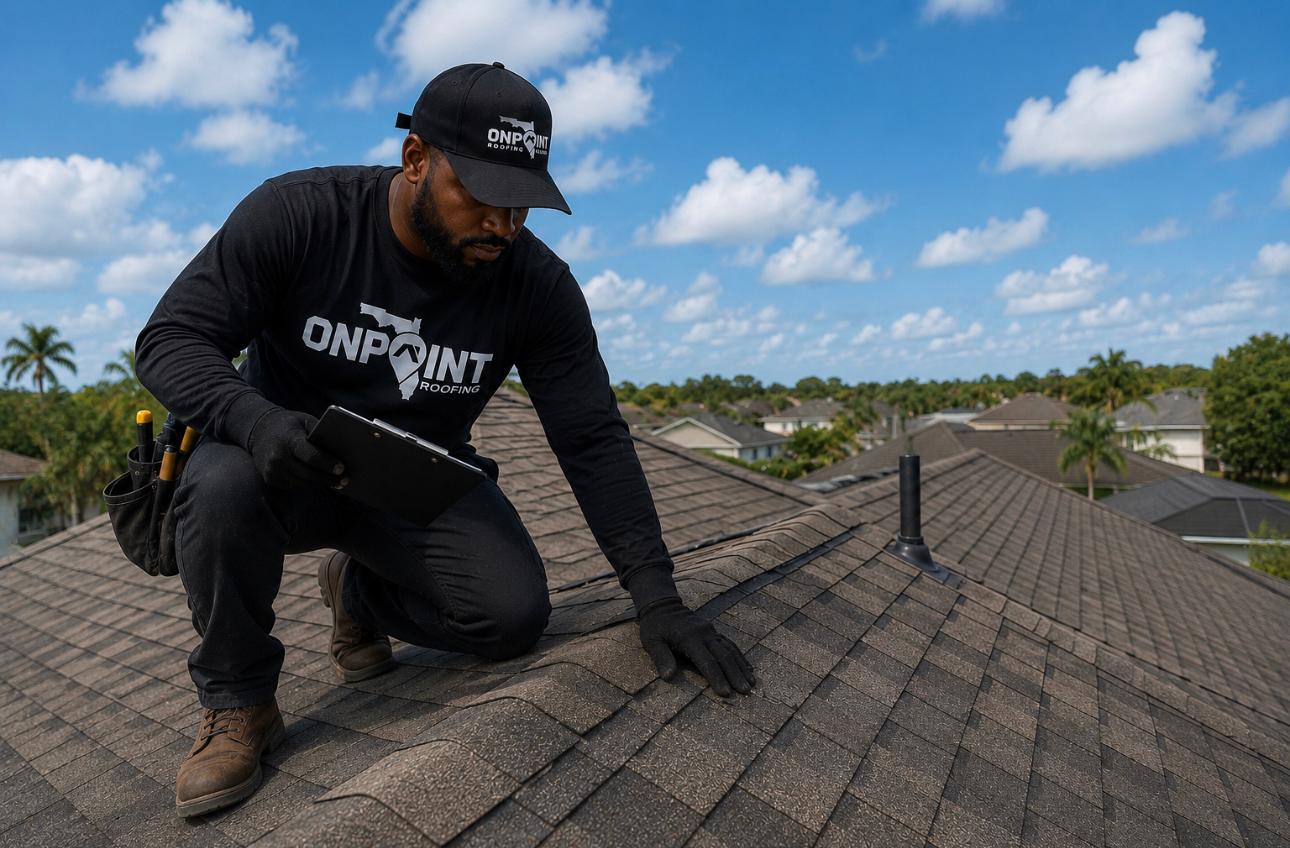
Roof deck check for soft spots In a severe hail event, impacts can be forceful enough to crack or compress the roof deck underneath the shingles. A roofer walking the roof can identify soft or spongy areas that indicate deck compromise beneath the surface.
Attic check for daylight or moisture Where accessible, a legitimate inspection includes an attic check for visible daylight, moisture staining on rafters, or active water intrusion. Post-hail attic checks catch damage that has already progressed to the structural layer before it becomes a ceiling problem.
What Does Free Actually Mean for a Hail Damage Inspection
The word free is used loosely in the roofing industry. Here is what it should and should not mean when a licensed contractor offers a free hail damage inspection.
What it should mean. A licensed contractor inspects your roof at no charge, provides you with a written report and photo documentation of their findings, and gives you an honest assessment of whether damage exists and what your options are. You are under no obligation to hire them for any work. If they find no claimable damage, they tell you that and leave.
What it should not mean. An inspection that is only free if you file a claim through them, a verbal walkthrough with no written report or photos, a ground-level assessment dressed up as an inspection, or a contractor who shows up unsolicited after a storm and pressures you to sign anything on the spot.
OnPoint Roofing’s free hail damage inspections are genuinely free with no obligation. We inspect, document, report, and give you our honest findings. What you do with that information is your decision.
How to Spot Signs of Hail Damage on Your Orlando Roof Before the Inspector Arrives
You do not need to get on your roof to do a basic first-pass assessment. Here is what to look for from the ground and around your property after a hail event:
Check your gutters and downspouts Walk around your home and look at your gutters. Fresh dents across the gutter face, particularly in a pattern consistent with impact rather than accidental contact, are a strong indicator of hail. Also check your downspout ends for a heavier than normal flush of granules in the days after a storm.
Look at soft metal surfaces at eye level Check your AC unit housing, any low-slope flashing you can see from the ground, and your mailbox if it is metal. Consistent circular denting across these surfaces after a storm is a reliable hail indicator that supports a claim.
Check your window screens and sills Hail often leaves impact marks or small tears in window screens. Window sills and painted wood trim can also show fresh impact marks. These are supporting evidence for a claim even though they are not roof-specific.
Look for shingle granules in unexpected places After a hail event, granules that were knocked off shingles often wash down and collect at the base of downspouts, in garden beds near the foundation, or in areas where water drains off the roof. A noticeably heavy granule accumulation after a specific storm is worth noting and photographing.
Document the storm date and any weather reports Before you call a contractor, note the date of the storm and save any local weather alerts or news coverage of the hail event. Insurance adjusters use weather data to verify that a hail event occurred at your location on a specific date. Having this information ready speeds up the claims process.
Red Flags to Watch Out For When Someone Offers a Free Inspection After a Hail Storm
After any significant hail event in Orlando, unlicensed contractors and out-of-state storm chasers flood the area offering free inspections and quick insurance claim assistance. Here is how to protect yourself:
They show up at your door unsolicited Legitimate roofing contractors do not go door to door after storms. If someone knocks on your door within days of a hail event and offers a free inspection and a quick claim, treat it with significant caution. Storm chasers operate this way specifically because the post-storm window is when homeowners are most likely to sign something they should not.
They ask you to sign an Assignment of Benefits An Assignment of Benefits is a document that transfers your insurance claim rights to the contractor. Once signed, you lose control over the claims process and the contractor negotiates directly with your insurer. Florida has had widespread abuse of AOB arrangements in the roofing industry. Do not sign one without your own legal and insurance review.
They cannot show you a Florida roofing license Any contractor doing roofing work in Florida must hold a current state license. Ask for the license number before any inspection begins and verify it on the Florida DBPR website. An unlicensed contractor doing inspection or repair work creates liability for you as the homeowner and voids manufacturer warranties.
The inspection takes less than 15 minutes A proper hail damage inspection of an average Orlando home takes 45 minutes to an hour. If someone is on and off your roof in 15 minutes with a claim that there is extensive damage, the inspection was not thorough.
They pressure you to file immediately A legitimate inspector gives you findings and lets you decide. Anyone who pressures you to file a claim on the spot, tells you the window is closing, or says you need to sign today is using a sales tactic rather than acting in your interest.
They offer to waive your deductible Contractors who offer to cover your deductible as part of the deal are violating Florida law. It is insurance fraud. This is a clear signal to end the conversation and find a different contractor.
Your Next Steps After a Hail Damage Roof Inspection in Orlando
Your inspector has finished and given you a written report. Here is how to move forward depending on what they found:
If no claimable damage was found Ask for the written report anyway. A documented clean inspection before hurricane season is useful as a pre-storm baseline for future insurance purposes. File it with your home records.
If damage was found but it is minor and localized A targeted roof repair may be the right call. Depending on the extent of damage and your deductible amount, a direct repair may be more cost-effective than filing a claim that triggers a premium increase. Get a repair estimate and compare it against your deductible before deciding whether to file.
If widespread damage was found across multiple sections This is a strong insurance claim situation. File promptly, have your contractor present during the adjuster visit, and get a written roof replacement estimate from your contractor to compare against the adjuster scope. If the adjuster scope is incomplete, your contractor’s estimate is your evidence for a supplemental claim.
If the roof is actively leaking after the storm Contact our emergency roof repair team immediately. Stopping active water intrusion is the priority before the insurance process plays out. Emergency repairs are documented and photographed as part of the claims process and do not negatively affect your claim.
How Long Do You Have to File a Hail Damage Roof Claim in Florida
Florida law gives homeowners three years from the date of a storm event to file an insurance claim. However, filing sooner is always better for several practical reasons:
● The connection between your roof damage and a specific hail event is clearest immediately after the storm.
● Weather verification data confirming the hail event at your location is easiest to obtain soon after the event.
● Contractor availability is better before post-storm backlogs develop.
● Any additional storm damage that occurs before you file can complicate the original claim.
If you are unsure whether damage from a past storm is still claimable, a roofing inspection with dated photo documentation gives you the foundation to find out before the window closes.
Why Documentation Is Everything in a Hail Damage Claim
Are you licensed in Florida and can I verify your license number? Any legitimate contractor answers yes immediately and gives you the number. Verify it at the Florida DBPR website before the inspection begins.
What does the inspection include and will I receive a written report with photos? The answer should describe a physical on-roof inspection with a documented written report. A contractor who cannot describe what they inspect or who does not offer a written report is not doing a real inspection.
Do you carry liability insurance and workers compensation? If a contractor is injured on your roof without proper coverage, you may be liable. Legitimate contractors carry both. Ask for the certificate of insurance before they get on your roof.
Will you be present during the insurance adjuster visit if I file a claim? A contractor who offers to accompany you during the adjuster inspection is a genuine advantage. They can point out damage the adjuster misses and challenge items the adjuster categorizes incorrectly.
What happens if the inspection finds no damage? The answer from a legitimate contractor is simply that they tell you and you owe them nothing. If the answer involves any kind of commitment or suggests they will find something, walk away.
Questions to Ask Before You Hire a Roofing Contractor for a Hail Damage Inspection
Pre-repair photos from the inspection Every impact mark, dent, granule loss area, and flashing crack should be photographed before a single shingle is touched. These photos are your proof of the damage as it existed at the time of the storm.
The inspection report with findings A written report from a licensed contractor that specifically identifies hail-caused damage carries significant weight with insurers. It should include the date of inspection, the inspector’s license number, and specific findings by roof section.
Weather event documentation A printout or screenshot of the National Weather Service data or local news coverage of the hail event at your specific location on the storm date. This establishes that the event occurred and that your property was in the affected area.
Any emergency repair documentation If temporary tarping or patching was done to stop an active leak, those repairs should be photographed and documented separately. Emergency repairs do not replace permanent repairs and should be noted as temporary in any claim submission.
Frequently Asked Questions About Hail Damage Roof Inspections in Orlando
Schedule Your Free Hail Damage Roof Inspection in Orlando
If a hail storm has moved through your area and you are not sure whether your roof took damage, the only way to know is a physical inspection by a licensed contractor. OnPoint Roofing provides free hail damage inspections across Orlando and Central Florida with written reports, photo documentation, and honest findings. No pressure, no door-to-door tactics, no Assignment of Benefits requests. Just a clear picture of what your roof looks like and what your options are