My Neighbor Just Got a New Roof Through Insurance in Orlando. How Do I Know If I Qualify Too
How Florida Roof Insurance Claims Actually Work
Storm damage vs wear and tear
Insurance covers sudden damage caused by a specific event. Wind, hail, flying debris, and falling trees are all covered perils under standard Florida homeowner policies. What is not covered is gradual deterioration, age-related wear, or maintenance neglect. The adjuster’s job is to determine which category your damage falls into. This is why documentation matters so much.
Replacement cost value vs actual cash value
Some Florida policies pay replacement cost value, which covers the full cost of replacing your roof with a new one of similar quality. Others pay actual cash value, which deducts depreciation based on your roof’s age. A 15-year-old roof with actual cash value coverage may receive a significantly reduced payout that does not cover the full replacement cost. Knowing which coverage you have before you file changes your expectations and your strategy.
The role of your deductible
Florida policies typically have a separate wind deductible that is higher than your standard deductible. It is often calculated as a percentage of your home’s insured value rather than a flat dollar amount. On a home insured for $300,000 with a two percent wind deductible, your out-of-pocket cost before insurance pays anything is $6,000. Factor this into your decision before filing.
Filing deadlines in Florida
Florida law gives homeowners three years from the date of a storm event to file a claim for storm damage. However, filing sooner is always better. Evidence of the damage is clearer, the connection to the storm event is easier to establish, and contractor availability is better before post-storm backlogs build up.
Signs Your Orlando Roof Has Storm Damage Worth Claiming
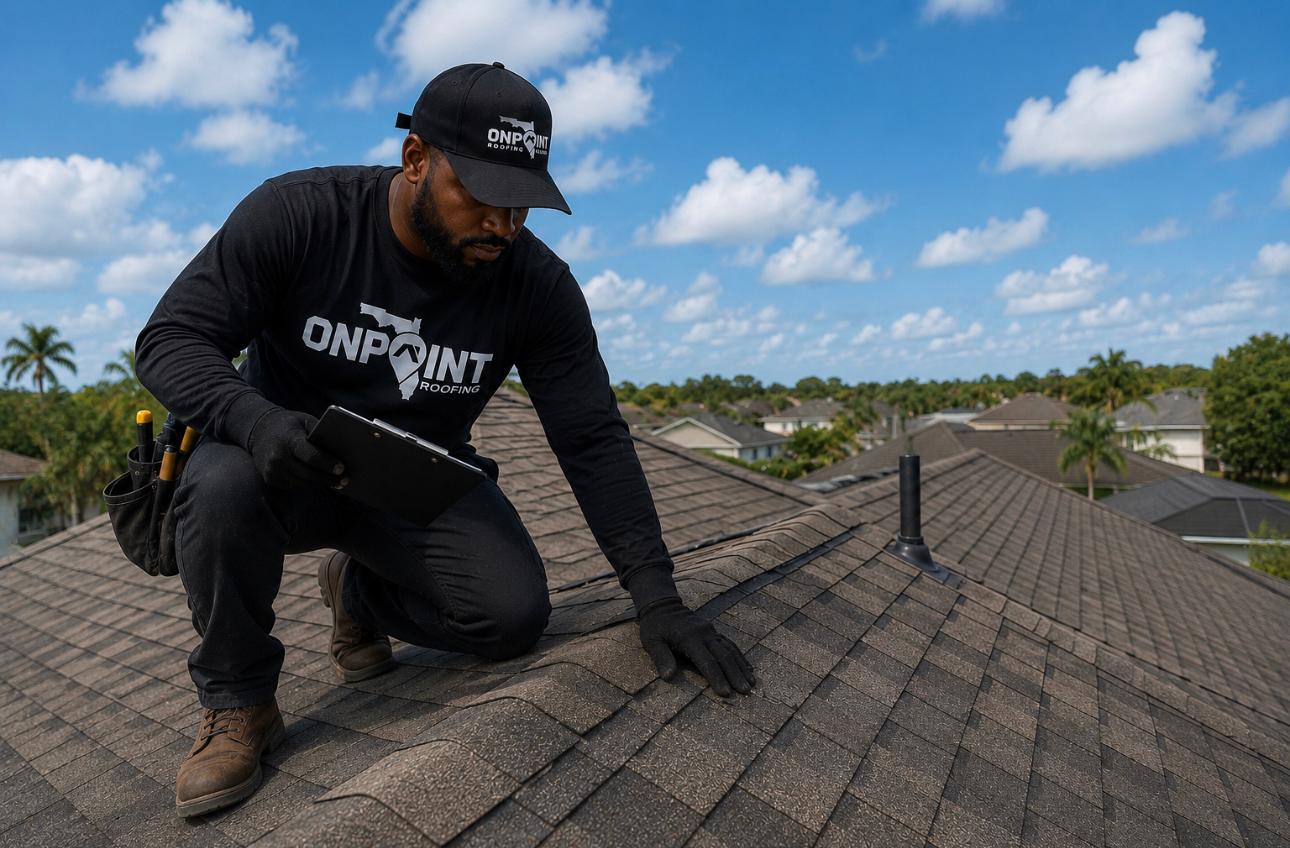
Many homeowners do not realize their roof has claimable damage because the signs are not always obvious from the ground. A professional roof inspection identifies and documents storm damage in the format insurers need. Here is what our inspectors look for:
Granule loss in circular or impact patterns
Random granule loss is wear and tear. Circular clusters of granule loss on shingles are hail impact marks. This distinction is critical for a claim. Hail damage creates a specific pattern that trained inspectors identify and adjusters recognize as a covered peril.
Cracked or split shingles
Wind damage causes shingles to crack along stress lines or split at the tab. This is different from the general cracking that comes with age. Storm-related cracking tends to follow the direction of wind loading and affects multiple shingles in a pattern.
Missing shingles after a specific storm event
Shingles blown off during a named storm event or a documented high-wind period are a straightforward insurance claim. The timing connection to a specific event matters. If you noticed shingles missing after a storm, document the date and report it.
Dented or damaged metal components
Gutters, flashing, drip edge, and vent caps are softer metal surfaces that show hail impact clearly. Denting on these components is often the clearest physical evidence of a hail event and supports a broader roof damage claim.
Damage to neighboring properties
If homes on your street had storm damage claims approved after the same event, your property very likely experienced the same conditions. Insurance companies track weather events geographically and this context supports your claim.
How to File a Roof Insurance Claim in Orlando. Step by Step.
1. Get a professional inspection first
Before you contact your insurance company, get an independent roofing inspection. This gives you documented evidence of the damage before an adjuster visits. Adjusters have financial incentive to minimize payouts. Having your own documentation going in puts you on equal footing.
2. Review your policy before filing
Know your deductible amount, whether you have replacement cost value or actual cash value coverage, and what your policy says about the claims process. Your declarations page has this information. If anything is unclear, call your agent before filing.
3. File the claim promptly
Contact your insurance company to open the claim. Provide the date of the storm event you believe caused the damage and request a copy of your claim number. The insurer is required to acknowledge your claim within 14 days under Florida law.
4. Be present for the adjuster visit
Do not let the adjuster inspect your roof without you or your roofing contractor present. Having your contractor on site means any damage the adjuster misses or dismisses can be pointed out and documented in real time rather than disputed after the fact.
5. Review the adjuster estimate carefully
The adjuster’s scope of loss is not final. If items are missing, undervalued, or categorized incorrectly, you have the right to dispute it. Your roofing contractor can provide a competing estimate that identifies what was overlooked.
6. Proceed with approved work through a licensed contractor
Once the claim is approved, the repair or replacement must be done by a licensed Florida roofing contractor who pulls the proper permits. Unlicensed work voids your warranty and can create problems with future insurance renewals.
Why Roof Insurance Claims Get Denied in Florida and How to Avoid It
A denied claim is not always the end of the road but avoiding denial in the first place is far easier. These are the most common reasons Orlando roof claims are denied or underpaid:
Damage classified as wear and tear
This is the most common denial reason. If your roof is old and shows general deterioration alongside the storm damage, the adjuster may classify everything as maintenance-related. A detailed inspection report that specifically identifies storm-caused damage separately from pre-existing wear is your defense against this.
Filing too long after the event
Waiting months or years to file makes the connection between the damage and a specific storm event much harder to establish. File promptly after you suspect storm damage even if you are still assessing the extent of it.
Prior damage that was not repaired
If your roof had known damage before the storm that you did not repair, the insurer can argue the new damage was made worse by neglect. Keeping up with minor repairs and maintaining inspection records protects you here.
Policy exclusions you were not aware of
Some Florida policies have specific exclusions for certain types of damage or roof ages. A roof over 20 years old may not be covered for full replacement under some policy structures. Know your policy before a storm rather than after.
Questions Orlando Homeowners Ask About Roof Insurance Claims
If storm damage has left your roof actively leaking while you work through the claims process, our emergency roof repair team can stabilize the damage immediately with documented photo evidence that supports your claim rather than complicating it.
Find Out If Your Orlando Roof Qualifies for an Insurance Claim
The only way to know for certain is a professional inspection with documented findings. OnPoint Roofing provides free inspections across Orlando and Central Florida with photo reports you can use directly in your insurance claim. We tell you honestly what we find and what we think it is worth pursuing.